

Loading article body...
Climate Tech & Resilience• August 18, 2026
Top 11 Waste Management Tools for 2026
S
Written by Skylimate Green Team
Log in to unlock personalised tool recommendations and AI solar matching.
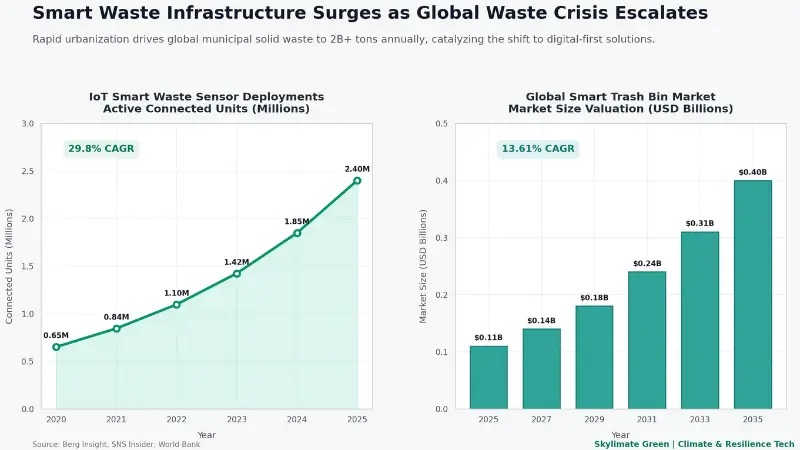
Rapid urbanization concentrates waste generation inside dense metropolitan grids that legacy collection systems cannot service. Cities now produce over 2 billion tons of municipal solid waste annually, and single-use packaging volumes continue to climb. Aging landfills approach capacity limits, pushing disposal fees higher every quarter. Meanwhile, organic matter decomposing inside those sites releases methane, a greenhouse gas roughly 80 times more potent than CO2 over a 20-year horizon. Unmanaged dumps also breed disease vectors and leach toxic runoff into groundwater, imposing direct public health costs on surrounding communities. Producer responsibility laws and post-COP30 mandates now compel municipalities and brands to recover these streams before they reach the gate.
The Primary Causes Driving This Crisis:
Which Tools Society Needs:
| Tool | Category | Best For | 2026 Proof Point | Deployment Model | Pricing Model |
|---|---|---|---|---|---|
| AMP Robotics | AI Sorting | Large MRFs | $91M funding round for AMP ONE | Hardware + Cloud | Monthly License |
| Greyparrot | AI Analytics | Recovery Plants | $27M Series B (July 2026) | Camera Lines + SaaS | Annual Subscription |
| CleanRobotics | Point-of-Disposal | Zero-Waste Facilities | 95%+ sorting accuracy | Smart Bin Hardware | Lease + SaaS |
| Rubicon | Brokerage | National Brands | Dumpster on Demand (Houston 2026) | Cloud Platform | Transactional |
| AMCS | Enterprise ERP | Large Haulers | 2026 AI Platform Updates | Cloud Enterprise | Tiered Licensing |
| Evreka | Municipal SaaS | City Councils | EU Capital Deployments (2025) | IoT + Mobile Apps | Per-Vehicle Contract |
| Bigbelly | Smart Compaction | Dense Urban Centers | 5x Capacity via Solar | Hardware + Cloud | Hardware + Subscription |
| Compology | Container Vision | Commercial Haulers | RoadRunner AI Acquisition | Camera Sensors + API | Per-Container Monthly |
| Ecube Labs | Fill-Level IoT | Municipal Fleets | CleanFLEX 4m Depth Sensors | Ultrasonic Sensors + SaaS | Tiered Monthly |
| Winnow | Food Vision | Hospitality Kitchens | 50% Waste Cuts at Scale | Vision Scale System | Per-Kitchen Subscription |
| Leanpath | Food Auditing | Corporate Dining | 360-AI Tracker (2026) | Smart Scale + Camera | Per-Location Contract |
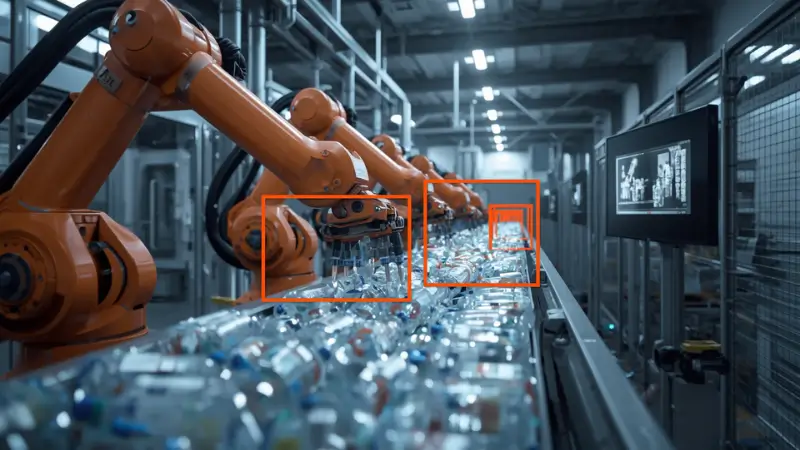
Modern facilities integrate high-speed robotics to refine the output of any Materials Recovery Facility (MRF). These systems identify polymers and metals in milliseconds, removing human error from the sorting line. This automation solves the inherent chaos of single-stream recycling by separating mixed loads with robotic precision. Operators increase purity levels and reduce residue, ensuring higher commodity values in a volatile market.
AMP Robotics deploys the AMP Cortex neural network to process visual data from high-speed conveyor belts. The system identifies specific polymer grades, paper types, and brand logos in milliseconds, guiding Delta robotic arms to execute precision picks at speeds exceeding 70 picks per minute. This automation eliminates the physiological limits of manual sorters, who typically fatigue after two hours and introduce contamination into bales. The recent $91M funding round accelerated the rollout of AMP ONE, a fully autonomous facility-scale architecture that manages entire material flows without human intervention.
Core Operational Functions:
Read the full spec sheet, deployment requirements, and hardware tolerances on the AMP Robotics directory page.
Greyparrot installs AI-powered vision sensors directly above MRF conveyor belts to capture continuous material flow data. The platform processes thousands of images per minute, identifying specific packaging formats, polymer types, and brand logos that traditional near-infrared scanners miss. This granular visibility allows facility managers to audit incoming loads and measure exact contamination rates before materials reach the sorting line. The July 2026 $27M Series B funding expanded their Analyzer network globally, providing packaging producers with the empirical data required to prove Extended Producer Responsibility (EPR) compliance.
Core Operational Functions:
Read the full technical specifications and integration requirements on the Greyparrot directory page.
CleanRobotics engineers the TrashBot as an autonomous point-of-disposal sorting node. The unit utilizes a multi-sensor array and edge-computing vision models to analyze deposited items in under a second. A motorized internal baffle system then physically routes the object into the correct segregated compartment, eliminating the reliance on public sorting literacy. This hardware prevents the cross-contamination that routinely causes municipalities to reject entire commercial recycling loads, directly protecting the facility's zero-waste certification status.
Core Operational Functions:
Read the complete hardware schematics and sensor tolerances on the CleanRobotics directory page.
Digital platforms now streamline the logistics of hauling and disposal. These tools allow managers to conduct a virtual waste stream audit by tracking tonnage and material types across multiple sites. This visibility transforms linear disposal into a circular economy by linking waste generators with specialized recyclers. Fleet operators reduce fuel burn and idle time through integrated dispatch software, replacing manual logs with real-time telemetry to ensure compliance with 2026 environmental mandates.
Rubicon operates a cloud-based digital brokerage platform that connects enterprise waste generators with a decentralized network of local haulers. The software replaces static, multi-year contracts with dynamic routing algorithms that dispatch trucks based on real-time container telemetry. This marketplace model eliminates the empty miles that plague traditional franchised hauling, directly reducing Scope 3 logistics emissions for corporate clients. The 2026 expansion of the Dumpster on Demand module into Houston demonstrated the platform's ability to scale short-term equipment rentals across major metropolitan grids.
Core Operational Functions:
Read the full platform architecture and API documentation on the Rubicon directory page.
AMCS delivers an enterprise-grade ERP system engineered specifically for the complex billing and routing logic of the waste sector. The platform integrates back-office financial management with onboard truck telematics and automated scale systems. This tight coupling eliminates the data silos that delay invoice generation and obscure fleet profitability. The 2026 platform updates introduced advanced AI modules for predictive maintenance and dynamic route optimization, allowing large enterprises to manage thousands of assets from a single cloud environment.
Core Operational Functions:
Analyze the complete enterprise deployment framework at AMCS Group.
Evreka provides a comprehensive SaaS suite that digitizes municipal sanitation operations from the curbside to the landfill. The platform ingests GPS, RFID, and weight sensor data to create a digital twin of the city's entire waste network. This visibility allows public works directors to enforce pay-as-you-throw (PAYT) billing models based on actual household generation rather than flat fees. The system's mobile applications serve as the primary mobile waste management tools for councils, giving drivers turn-by-turn navigation and instant fault reporting capabilities.
Core Operational Functions:
Review the municipal deployment protocols at Evreka.
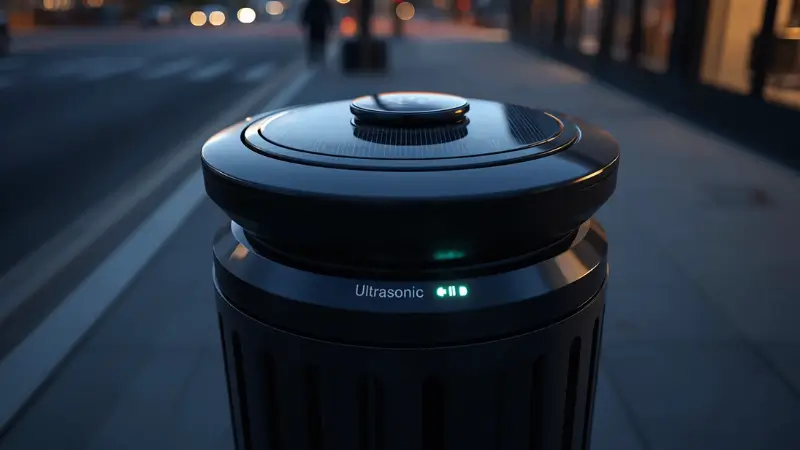
Municipalities now deploy advanced solid waste management tools and equipment to eliminate inefficient pickup cycles. These hardware solutions integrate with cloud software to enable dynamic route optimization. Instead of following static schedules, drivers only visit bins that require emptying. This shift slashes fuel consumption and reduces urban traffic congestion. By leveraging real-time telemetry, city managers transform blind collection into a precision operation, ensuring cleaner streets while lowering the total cost of ownership for public sanitation fleets.
Bigbelly engineers solar-powered smart compactors that actively crush deposited waste to multiply physical bin capacity. An internal ultrasonic sensor monitors the compaction chamber and transmits fill-level telemetry to a central cloud dashboard. This mechanism increases storage volume fivefold compared to open-top receptacles, effectively eliminating the overflow and windblown litter that plague public spaces. The system directly reduces fleet fuel consumption by dispatching collection crews only when the unit reaches maximum density.
Core Operational Functions:
Examine the hardware specifications and solar yield data at Bigbelly.
Compology mounts wide-angle, AI-enabled cameras inside commercial dumpsters to capture high-resolution images of the waste stream multiple times daily. The proprietary computer vision models analyze these images to calculate exact volumetric fullness and identify specific prohibited materials. This data provides haulers and property managers with an empirical Contamination Score, enabling them to enforce recycling policies and penalize negligent tenants. The RoadRunner acquisition accelerated the deployment of this AI metering technology across thousands of commercial routes.
Core Operational Functions:
Read the full sensor specifications and API integration guides on the Compology directory page.
Ecube Labs manufactures the CleanFLEX ultrasonic sensor suite to measure waste accumulation in deep-bellied containers. The devices emit high-frequency sound waves that bounce off the material surface, calculating fill-level monitoring data with millimeter precision up to a 4-meter depth. This hardware integrates seamlessly with cloud platforms to trigger dynamic route optimization algorithms. Municipalities deploy these sensors to eliminate the blind collection cycles that waste fuel and labor on half-empty bins.
Core Operational Functions:
Review the sensor deployment matrices at Ecube Labs.

Commercial kitchens now deploy AI-driven scales and cameras to track prep-waste in real-time. These systems identify exactly which ingredients hit the bin and why. This data allows chefs to adjust procurement and portion sizes with empirical precision. By eliminating over-ordering, kitchens slash food costs and reduce their environmental footprint. These tools transform the loading dock from a cost center into a source of operational intelligence, ensuring lean production across large-scale hospitality groups.
Winnow installs AI-enabled vision systems directly above commercial kitchen prep bins to automate food waste tracking. The camera captures images of discarded ingredients, while the integrated scale records the exact weight. The machine learning model instantly categorizes the item and assigns a financial and environmental cost, logging the data into a centralized dashboard. This empirical visibility drives organic waste diversion by forcing executive chefs to confront the exact financial leakage caused by overproduction and trim waste.
Core Operational Functions:
Read the complete kitchen integration protocols on the Winnow directory page.
Leanpath deploys the 360-AI Tracker to combine smart scales, overhead cameras, and automated data capture for comprehensive kitchen waste auditing. The system forces staff to select a reason for disposal before the scale registers the weight. This granular data links physical waste tonnage directly to Scope 3 emissions reporting and corporate sustainability goals. The 2026 deployment of the 360-AI Tracker accelerated adoption across corporate dining facilities and university campuses.
Core Operational Functions:
Analyze the enterprise deployment framework at Leanpath.
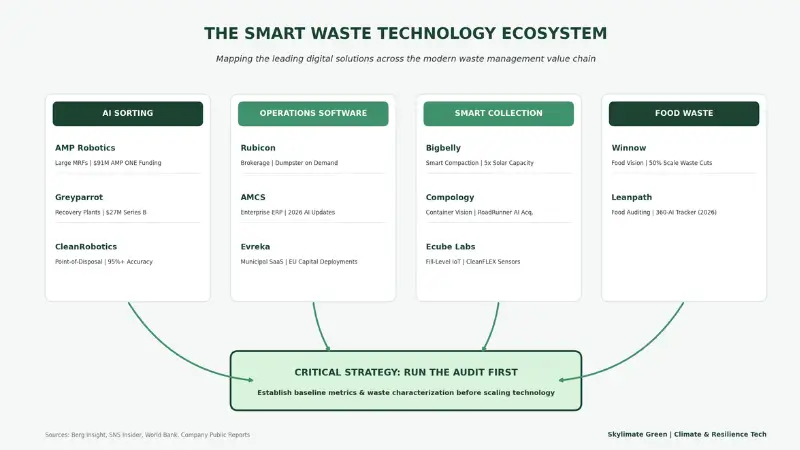
Facility managers must execute a rigorous business waste management audit before investing in new technology. This process ensures the software solves actual operational bottlenecks rather than adding unnecessary complexity. A comprehensive waste management audit checklist prevents costly implementation failures by aligning technical capabilities with site-specific needs.
First, map every single waste stream across the facility to identify the highest volume sources. Second, weigh these streams over a fourteen-day period to establish an empirical baseline for tonnage. Third, analyze current contamination levels in recycling bins to determine if the site requires AI sorting or simple employee training. Fourth, review existing hauling contracts to find hidden fees or rigid schedules that conflict with dynamic routing software. Fifth, interview field engineers to identify the most frequent points of failure in the current collection cycle. Sixth, calculate the current cost per ton of disposal to create a clear ROI target for the new system.
Executing these steps allows managers to specify exact requirements during the procurement phase. This data-driven approach eliminates the risk of over-buying features that provide no operational value. By quantifying the current state of the waste stream, the organization ensures that the chosen tool directly reduces overhead and improves diversion rates.
The industry now abandons manual hauling in favor of AI-driven precision. These tools replace guesswork with real-time telemetry and robotic accuracy, slashing operational costs across the board. Operators no longer rely on static schedules or manual logs to manage their fleets. Instead, they leverage cloud intelligence to optimize every pickup and sort every bale. This shift ensures higher material purity and lower carbon footprints for municipalities and enterprises alike. As regulatory mandates tighten in the post-COP30 era, these technologies provide the only viable path to scalable efficiency. Firms that integrate these systems now secure their position in a leaner, more transparent waste economy.